


Botanical Information and Ecology Network
Reproducible infrastructure for plant biodiversity science
BIEN is an integrated, version-controlled data ecosystem for plant occurrence, vegetation-plot, and standardized trait data. A shared taxonomic and geographic validation layer makes provenance and data quality auditable, so analyses can be filtered transparently and reproduced.

BIEN 4.2 in numbers
Scope of the current release
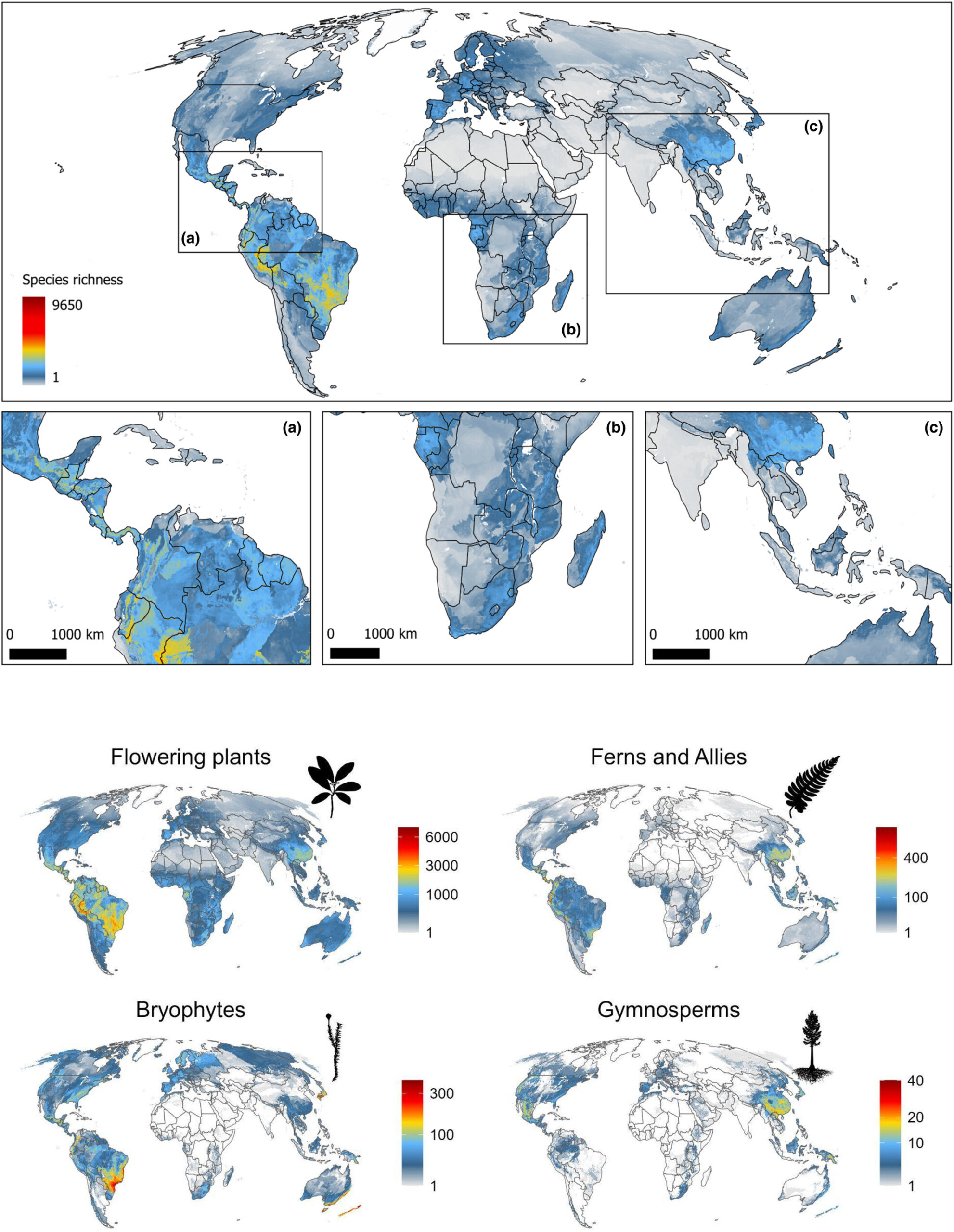
Counts reflect the BIEN 4.2 release (Enquist et al. 2026, Table 3) and are version-dependent. The range database indexes 289,743 species; 98,829 of these met the data-sufficiency criteria required to produce modeled range maps. Under BIEN’s combined taxonomic and geographic validation, roughly half of contributed occurrence records fail one or more checks and are flagged or excluded. Modeled range maps are statistical predictions of potential distribution, not verified occupancy.
Using BIEN
Start here
BIEN Overview
What BIEN is and the science it supports.
Data & Access
Data portal, BIEN R package, and applications.
Methods & Workflow
The four validation services and QA logic.
Citation & Publications
How to cite BIEN and its source datasets.
Data quality and scope
Validated, flagged, and auditable
BIEN standardizes plant names, screens coordinates, and flags cultivated versus wild records, so data arrive analysis-ready with explicit quality-control information rather than hidden assumptions. It integrates vegetation-plot and standardized trait data alongside occurrence records, and is complementary to aggregators such as GBIF rather than a replacement.
Scope and limitations. Coverage is strongest for New World vascular plants, and sampling effort is spatially and taxonomically uneven. Modeled range maps are statistical predictions of potential distribution, not verified occupancy. Analyses should report filters, provenance, and uncertainty explicitly.
Nomenclatural and geographic resolution
Four core services
Every record passes through four services, accessible via APIs and the BIEN R package. Each augments records with quality-control flags for transparent filtering.
Featured applications:
Species ShinyApp
Traits ShinyApp
Cite BIEN
Enquist BJ, Boyle B, Maitner BS, et al. (2026). BIEN: A biodiversity informatics ecosystem advancing open and reproducible workflows for plant observation, plot and trait data. Methods in Ecology and Evolution, 17(5), 1556–1584. DOI: 10.1111/2041-210X.70274.
Coverage is strongest for New World vascular plants; sampling is spatially and taxonomically uneven; modeled ranges are predictions, not verified occupancy.

Botanical Information and Ecology Network · About BIEN